In Pollica, the Italian UNESCO Emblematic Community of the Mediterranean Diet, food is more than a collection of recipes. It is a way of preserving landscapes, knowledge, biodiversity and relationships between people.
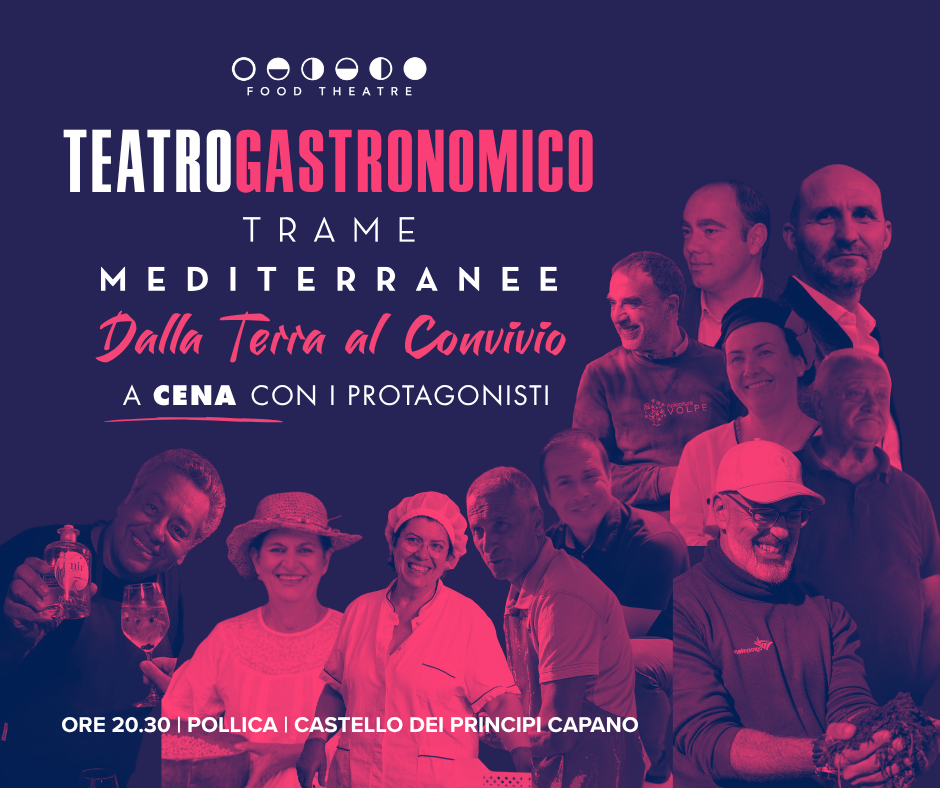
This is the idea behind Trame Mediterranee – Teatro Gastronomico, a cultural programme taking place from 28 July to 27 August at the historic Castello dei Principi Capano. Developed by the Future Food Institute, promoted by the Municipality of Pollica and curated by journalist Yuri Buono, the initiative brings together farmers, fishers, breeders, winemakers, artisans, chefs and local communities to tell the story of the Mediterranean Diet through the people who keep it alive.
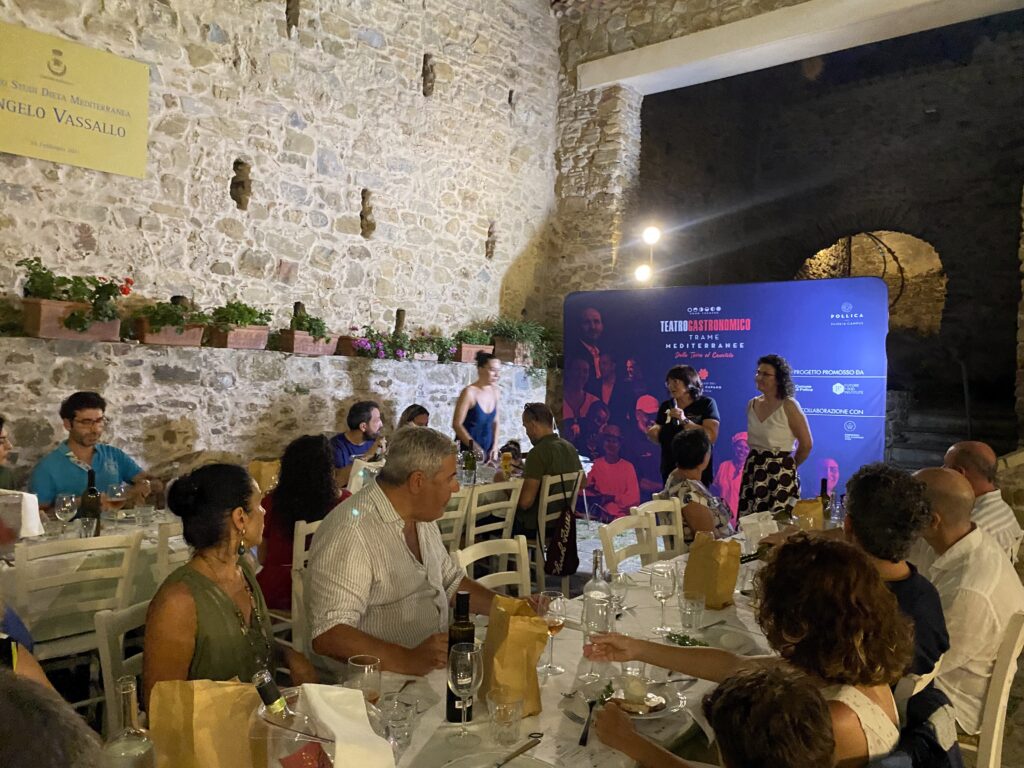
Each event turns the castle into a space for dialogue and storytelling. Tastings, conversations and cultural performances explore the relationship between food, biodiversity, landscape and local traditions.
At the centre of the programme are the Θεματοφύλακες της Μεσογειακής Διατροφής: the people whose everyday work continues to shape the cultural and natural landscape of Cilento. Farmers cultivating local crops, fishers preserving traditional practices, winemakers caring for vineyards and artisans passing on food knowledge all contribute to a heritage that is continuously renewed rather than simply preserved.
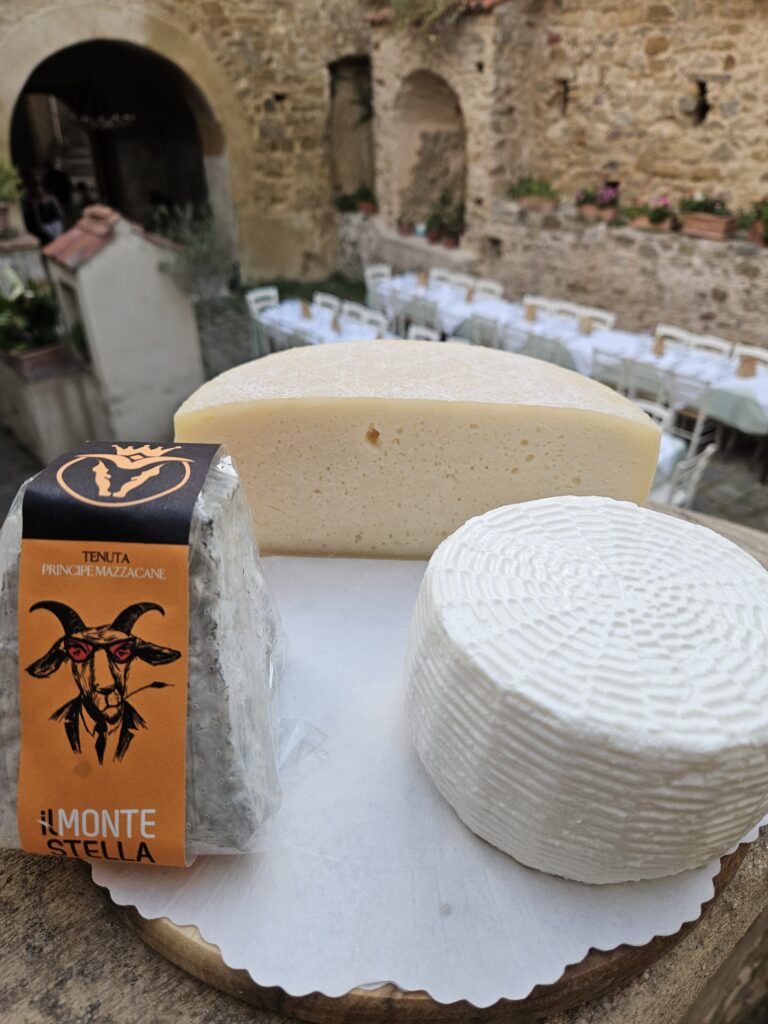
The programme explores some of the ingredients and practices that characterise Cilento’s food culture, including ancient grains, traditional cheeses, local botanicals, native grape varieties, figs, honey, Menaica anchovies and extra virgin olive oil.
Local and national organisations, including the Consorzio Tutela Vini Salerno, the Italian Sommelier Association (AIS) and the National Organisation of Cheese Tasters (ONAF), also contribute to the programme by helping participants understand the links between products, production methods and territory.
Trame Mediterranee also highlights the role of conviviality as a fundamental element of the Mediterranean Diet. Sharing food creates opportunities for exchange between generations and communities, transforming the table into a space for dialogue, cultural transmission and cooperation.
The programme concludes with a communal gathering involving local producers and the grandmothers of Pollica, whose knowledge represents an important part of the living memory of the Mediterranean Diet.
Through initiatives such as Trame Mediterranee, Pollica continues to demonstrate how UNESCO heritage can remain active in contemporary life: not as a legacy to be observed from a distance, but as a living practice connecting people, biodiversity, agriculture, culture and place.