

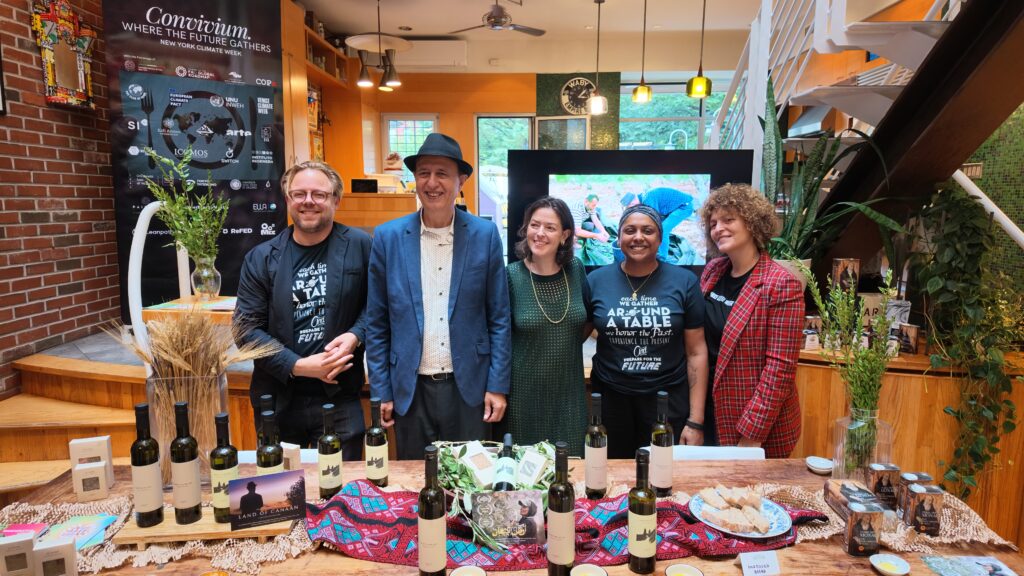
At Convivium in New York, Land of Canaan opened a conversation about Palestinian olive farmers, the Mediterranean Diet and the responsibilities that begin when we share a meal.
Before the meetings, there was the olive oil. Before the conversation could turn to the future of food, there was the question of the people who had made it possible.
Convivium opened its September 2026 programme in New York with “Seeds of Sovereignty: Food, Land & Heritage”, a gathering centred on Land of Canaan and the work of Palestinian olive farmers. During a week devoted to climate commitments and international diplomacy, this was a deliberate place to begin: with the land, the knowledge held by those who cultivate it, and the conditions that allow them to imagine another harvest.
At 337 East 8th Street, in the East Village, Future Food Institute, the Municipality of Pollica and the Mediterranean Diet Study Center “Angelo Vassallo” brought a Mediterranean practice into the rhythm of New York. They opened a space to gather, share food and give a conversation time to develop.
The question behind that hospitality was demanding. When we celebrate a food culture, what responsibility do we accept towards the people who keep it alive?
The meaning of a convivio
A convivio begins with the practical work of welcoming someone. A place is made. Food is prepared and shared. The host pays attention to who has arrived, who has been heard and who still stands at the edge of the conversation.
Within the Mediterranean Diet, eating together is part of the heritage itself. It is one of the ways knowledge travels, relationships are renewed and people learn to belong. A recipe can be written down; much of what surrounds it is learned by doing, watching and spending time with others.
In New York, Convivium gave this practice a public purpose. Its programme connected food and water with education, community life and territorial regeneration. Alongside the wider conversations of Climate Week and the United Nations General Assembly, it created a setting in which people working at different scales could listen to one another.
Hospitality does not guarantee agreement. A shared table can also reveal differences that a formal exchange leaves untouched. It asks participants to stay with a question long enough to understand why another person experiences it differently.
This is where the convivial tradition becomes useful to diplomacy. Trust takes time, and attention is part of the work. The value of a gathering depends on whether the relationships formed there can sustain a difficult conversation and, eventually, a common undertaking.
Why begin with Land of Canaan?
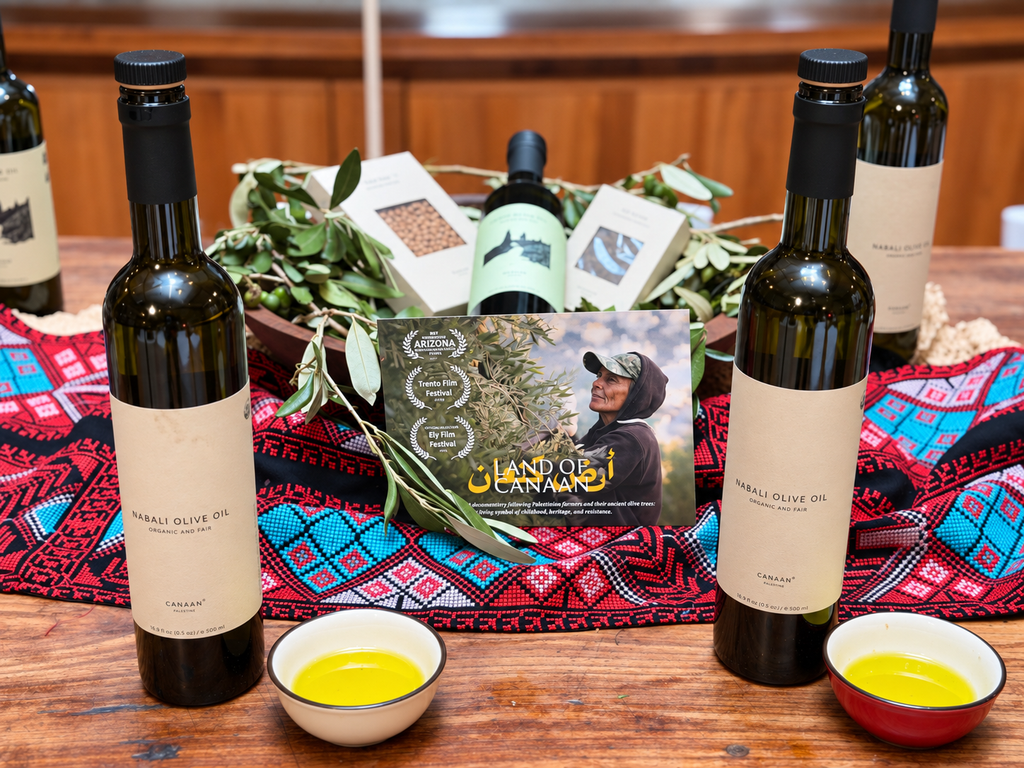
Maggie Lemere’s documentary follows Palestinian farmers and ancient olive trees in the occupied West Bank. At its centre is Nasser Abufarha, the Palestinian American anthropologist and founder of Canaan Palestine, whose work connects farming communities with fair trade and international markets.
The film brings into view the relationship between agricultural livelihoods, ecological knowledge and the possibility of remaining on one’s land. Trees carry the history of those who planted and tended them. Their continued cultivation depends on people being able to reach them, care for them and earn a living from their fruit.
Beginning with this story placed the Mediterranean Diet’s cultural meaning in direct contact with its material conditions. The olive tree is widely recognised as a symbol of peace. The farmer needs peace in the form of safety, access to land and water, and the ability to work.
This concern did not end when the New York gatherings were over. In its 15 October report, the UN Office for the Coordination of Humanitarian Affairs documented violence affecting Palestinian olive harvesters, restrictions on access to land and damage to trees and agricultural infrastructure in the West Bank. The pressures on the harvest give the conversation an urgency beyond the event.
In her earlier writing about Convivium, Sara Roversi expressed the responsibility plainly: “No one should have to be heroic to harvest olives.”
Admiration for farmers’ perseverance must not make the conditions they endure seem acceptable. Safeguarding a food heritage requires concern for the rights, safety and livelihoods of its custodians. Otherwise, a culture can be celebrated internationally while the people sustaining it lose the means to continue.
The people behind the food
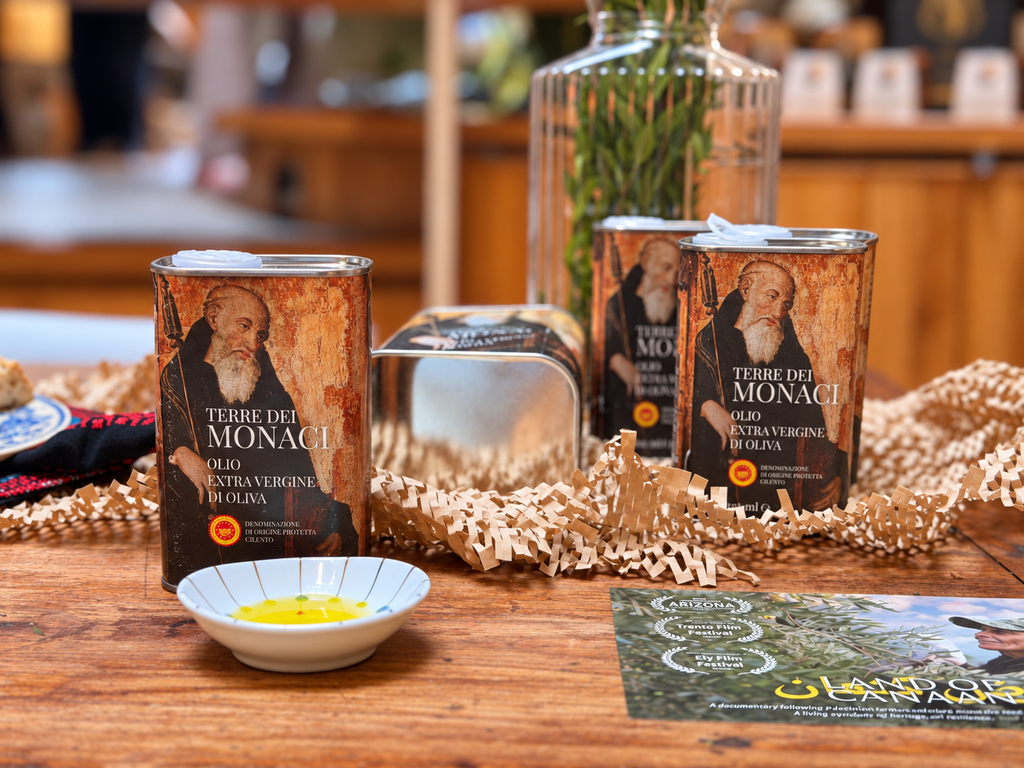
The ingredients brought from Pollica made that responsibility tangible. There was olive oil from Peppe Cilento and the local cooperative, alici di menaica from Vittorio and Donatella, and grains from Edmondo, Luigia and Simona Soffritti.
These were foods with people’s names attached. Each name connected an ingredient to someone’s work, judgement and knowledge. It made the distance between a discussion about food systems and the lives within them a little shorter.
Naming producers also changes the questions a table can hold. What price allows this work to continue? Who will learn the skills? What happens when the next generation wants to stay but cannot build a livelihood? How does an institution’s purchasing decision affect the people whose heritage it praises?
The circumstances of Cilento and the occupied Palestinian territory are profoundly different. A serious exchange must preserve that distinction. What connects the conversation is the responsibility to recognise agricultural knowledge and the people who carry it, wherever they live.
Canaan’s work on fair trade offers one practical route into that responsibility. Commercial relationships can help connect producers with buyers who value their work. Their worth must be assessed through the security and opportunities they create for farming families, alongside the care of the land.
A tasting can begin that understanding. It should leave us better able to ask who benefits from the food economy and what we can change through our own decisions.
A Mediterranean shared through difference
The Mediterranean Diet gives these questions a wider cultural setting. Its heritage is held across different countries and communities, shaped by exchange as well as by the particularities of place. No single menu can contain that diversity.
Pollica’s contribution comes from the relationship between its community, municipality, Study Center and Paideia Campus. Their work connects education with farming, fishing, research and everyday civic life. It asks how a territory can remain a place where people learn, work and choose to build a future.
Bringing this experience to New York means making it available for conversation with other places. It requires curiosity about what those places know and an openness to being changed by the encounter.
The shared meal is well suited to that work because food can make a distant question concrete. Land becomes the source of an ingredient. Water becomes a condition of a harvest. Cultural transmission becomes the skill of someone preparing a dish and the opportunity for someone younger to learn.
This gives conviviality a demanding place within the Mediterranean Diet. Welcoming people also means allowing their knowledge and their questions to affect what happens next. A community’s story deserves more than a moment of attention before the conversation returns to its familiar agenda.
What should remain after the table is cleared?
New York offers an extraordinary concentration of institutions, expertise and influence during Climate Week. Convivium’s purpose was to bring those possibilities into a setting grounded in food, relationships and the experience of communities.
Its opening with Land of Canaan established a measure for that ambition. The usefulness of international dialogue should be judged partly by what it enables for people whose work and futures are being discussed.
For a university, that might mean an educational relationship that gives producers a voice in what is taught. For a buyer, it might mean a more reliable and equitable relationship with a farming cooperative. For an institution, it might mean bringing community evidence into decisions about land, water, food or cultural protection. These are possibilities that require follow-through, rather than achievements a dinner can claim.
The first International Day of the Mediterranean Diet, on 16 November 2026, offers another occasion to make those responsibilities visible. The meaning of the celebration will depend on how it supports the living practices through which the heritage continues.
Convivium began with an invitation to share food. Land of Canaan made clear how much that invitation could contain: the work of a farmer, the memory of a community, the uncertainty of a harvest, and the right of another generation to carry on.
The table will be cleared. The responsibility is to keep those people in view when the next decision is made.
Further reading: Sara Roversi’s “From New York to the Land: A Mediterranean Table for Peace” and “Da New York alla terra: un convivio mediterraneo per la pace” explore the reflections behind Convivium’s opening.

